
How 3D Virtual Tours Help Hospitality Venues Turn Online Interest Into Better-Quality Enquiries
For restaurants, bars, private dining spaces and event-led venues, a 3D virtual tour does more than show what a space looks like. It helps people understand the atmosphere, layout and experience before they enquire, visit or book.
Why it matters
Hospitality decisions are highly visual. Whether someone is planning a dinner, a corporate event, a private celebration or a group booking, they want to feel confident that the venue is right before taking the next step.
More traffic is useful. Better-quality enquiries are more valuable.
A well-built hospitality website should do more than display menus, photos and contact details. It should help potential guests picture themselves in the space and make it easier for them to decide whether your venue is the right fit.
Let guests understand the atmosphere before they arrive.
Hospitality is not only about what is available. It is about how a place feels. Static images can show selected angles, but a 3D virtual tour allows guests to explore the venue at their own pace.
This is especially useful for venues where atmosphere is a major part of the decision: restaurants, cocktail bars, private rooms, event spaces, heritage venues, wellness spaces and premium hospitality experiences.
- Show the layout, seating, flow and atmosphere clearly.
- Help visitors feel more confident before booking or enquiring.
- Give your website a more immersive and memorable experience.
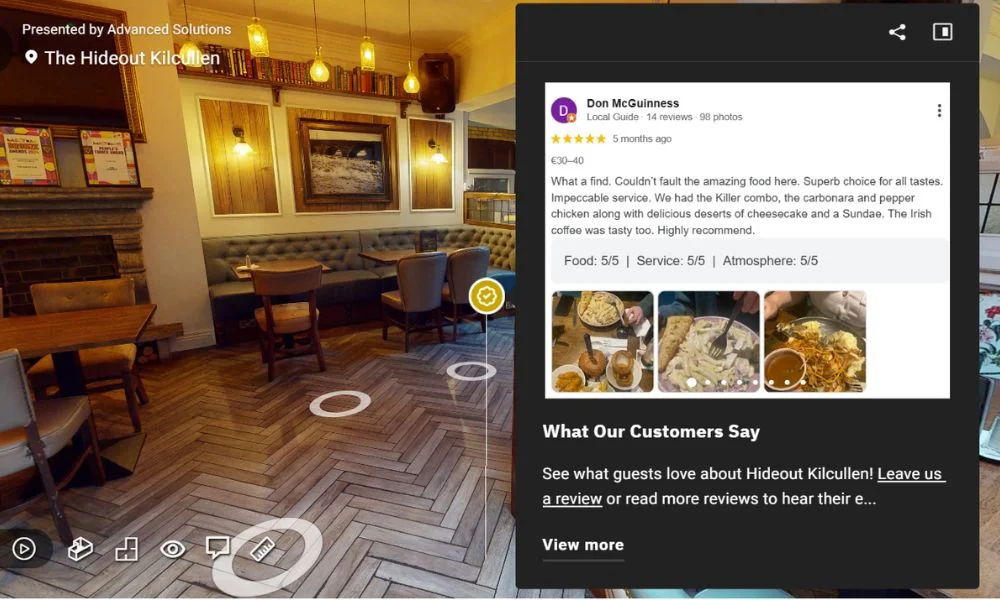

Make it easier for event planners to shortlist your venue.
For private dining, corporate events, weddings, celebrations and group bookings, people often need more than a photo gallery. They need to understand whether the space works for their guest numbers, atmosphere, layout and event style.
A 3D virtual tour can reduce uncertainty early in the decision-making process. Instead of asking for extra photos or trying to imagine the space from a floor plan, potential clients can explore it directly.
- Support corporate event and private hire enquiries.
- Help planners pre-qualify the space before a site visit.
- Give sales teams a stronger asset to send in follow-up emails.
Your website becomes more than a brochure.
When a virtual tour is embedded directly into a venue website, it gives visitors a reason to spend longer exploring. It turns a passive page into an active experience and helps the venue communicate atmosphere, scale and quality more clearly.
This is particularly valuable for hospitality venues where the website is often the first serious touchpoint before someone books a table, sends an enquiry, considers a private event or shares the venue with others.

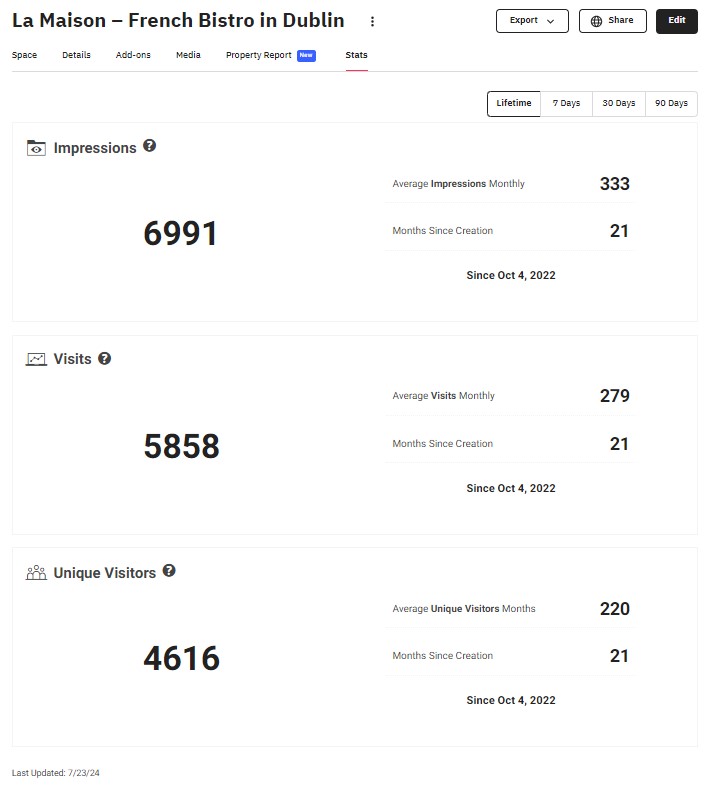
A virtual tour can keep working long after it goes live.
One of the biggest advantages of a 3D virtual tour is that it is not a short-lived campaign asset. Once added to a website, Google profile or sales process, it can continue helping visitors explore the space over time.
In one hospitality example, La Maison Dublin’s virtual tour generated 6,991 impressions, 5,858 visits and 4,616 unique visitors over a 21-month period.
Results will vary by venue, visibility and how the tour is used, but the principle is clear: strong visual experiences can keep supporting discovery and decision-making long after launch.
For guests
They can explore the space, understand the atmosphere and feel more confident before they visit or book.
For event planners
They can quickly assess whether the venue layout, style and scale match the event they are planning.
For venue teams
They gain a practical sales asset that can be used on the website, in emails, in proposals and across marketing channels.
The value continues across Google, sales emails and social content.
A strong 3D virtual tour can be used in multiple places, not just on one page. It can support your Google Business profile, Google Street View presence, event sales conversations, booking emails, social media content and paid campaigns.
For hospitality venues, this is important because people discover and evaluate venues across multiple touchpoints.
- Embed it on your website and venue pages.
- Use it in event enquiry follow-ups and proposals.
- Connect it with Google Street View for stronger discovery.

Immersive content is changing how people evaluate spaces online.
Matterport references 300% higher engagement for travel and hospitality 3D experiences. Matterport also reports that customers have seen 80% improved engagement, 12x more social sharing, 65% greater purchase likelihood and 20% higher conversion rates.
In Matterport’s Kapow event-space case study, the platform reported more than 400% higher engagement with event space listings, alongside 4.5x more time spent on site and 2x more page views after implementing Matterport.
For hospitality venues, the takeaway is practical: when people can explore a space more clearly online, they can make decisions with more confidence.
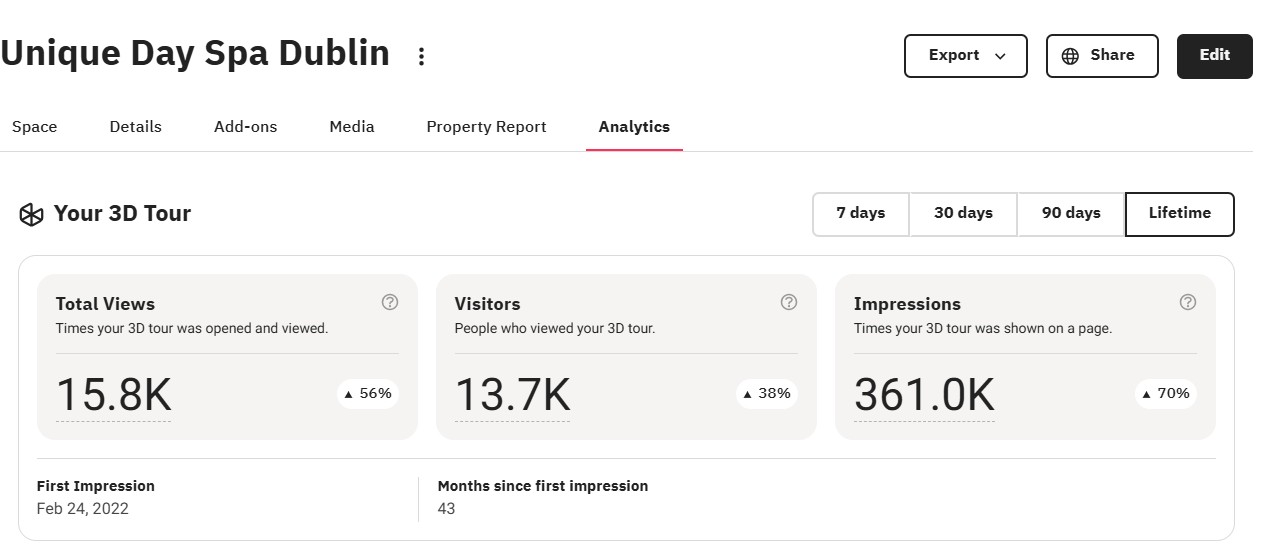
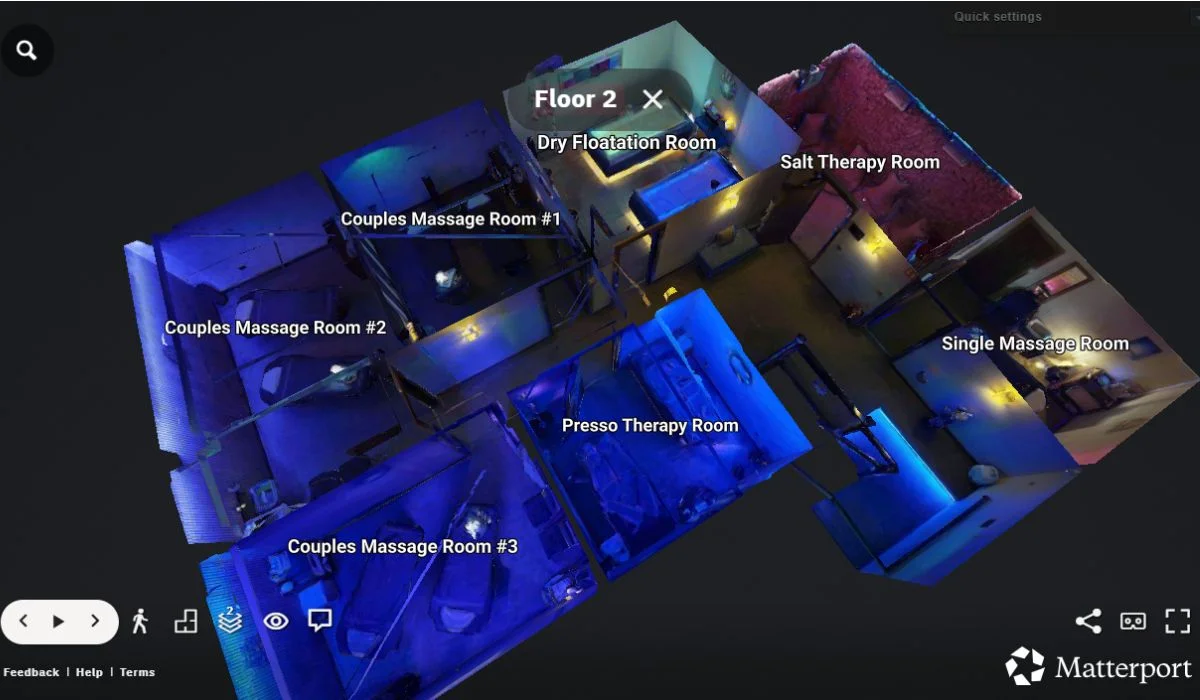
Layout matters when people are choosing a venue.
A venue might look beautiful in photos, but potential guests and planners often need a clearer sense of how the space actually works. Where are the entrances? How do rooms connect? Is the space suitable for a group, a private function or a specific type of event?
With Matterport, visitors can move through the space, understand the layout and see how different rooms connect. For larger venues, multi-room hospitality spaces and event-led environments, that added clarity can make the enquiry process smoother.
Especially useful for venues with different rooms, concepts or guest experiences.
Multi-space hospitality operators often have venues with different personalities: restaurants, bars, private rooms, function spaces, destination venues and event-led experiences.
A 3D virtual tour helps each space communicate its own atmosphere clearly, while giving the wider brand a more polished and consistent sales asset.
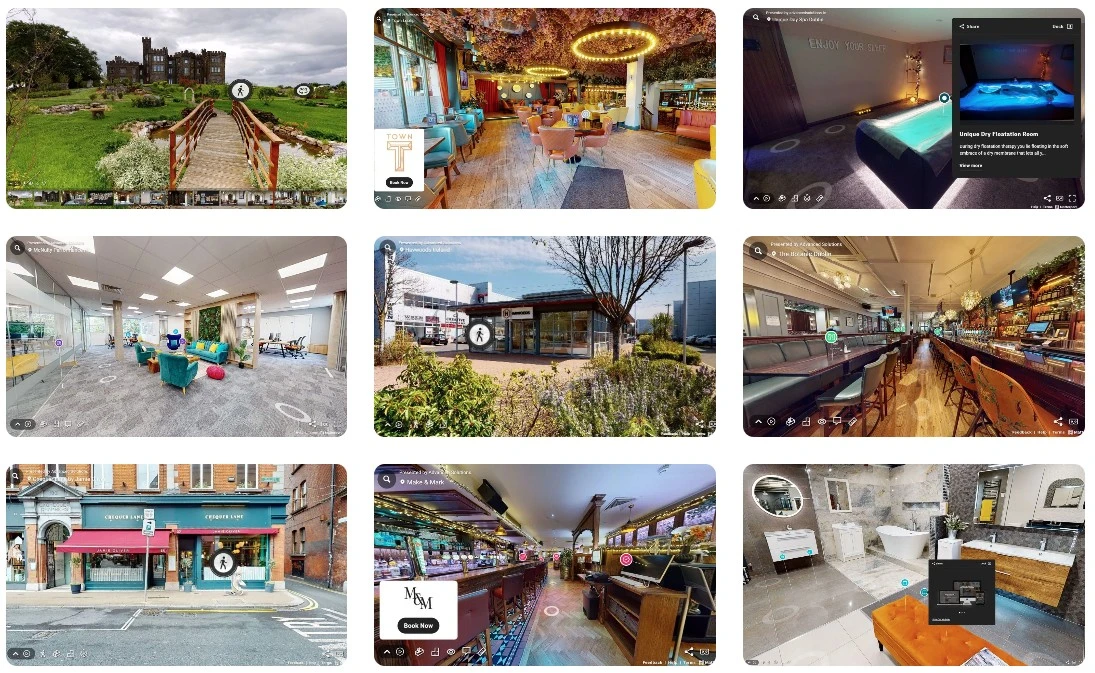
Ready to turn your hospitality venue into a more immersive online experience?
We create premium Matterport 3D virtual tours for restaurants, bars, hotels, private dining spaces, event venues and hospitality groups across Ireland.