
Ecommerce Product Page SEO: A Practical Checklist for Irish Online Shops
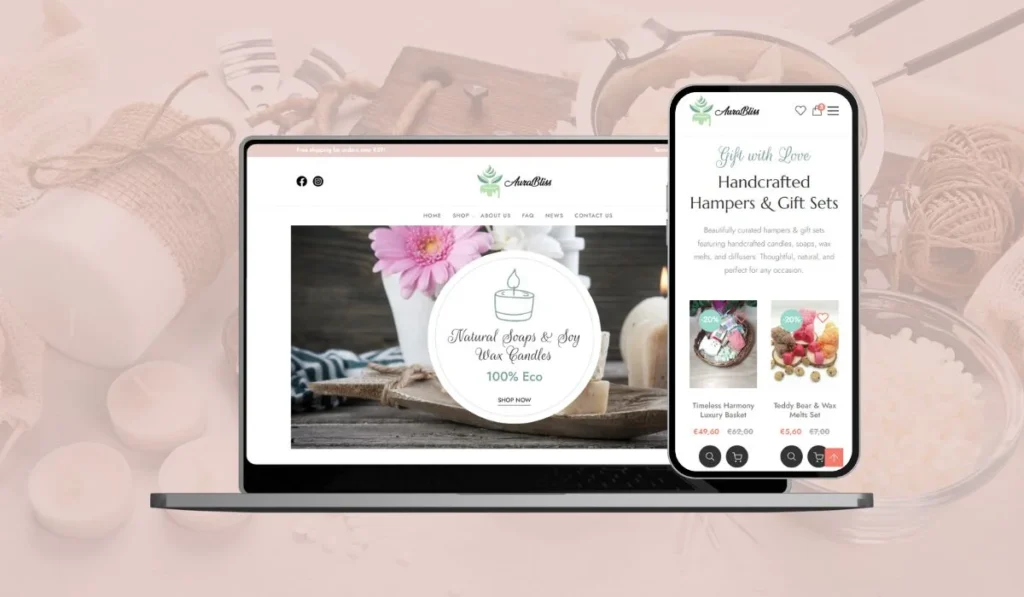
A product page has two jobs: help the right shopper find the product and help that person decide whether to buy. Optimising only for keywords can leave customers confused; optimising only for visual design can leave important product details invisible to search engines.
For Irish ecommerce businesses using Shopify or WooCommerce, the strongest product pages combine clear language, accurate product information, accessible images and a reliable checkout journey.
1. Use the product name shoppers recognise
Write a specific title with the product type and relevant distinguishing details. ‘Handmade Soy Wax Candle – Fresh Linen, 220g’ is more informative than ‘Luxury Item No. 04’. Keep brand names where they matter, but don’t repeat ‘Ireland’ in every product name unless it genuinely helps identify the product.
2. Write original, useful descriptions
Supplier descriptions are often shared across many stores. Add information your customer actually needs: size, material, fragrance, finish, intended use, care, suitability and limitations. Make the first paragraph answer what the item is and why somebody would choose it.
For products where scent, texture or fit cannot be experienced online, describe those characteristics carefully and avoid exaggerated or unverifiable claims.
3. Give each product a distinct purpose
Colour and size variants may belong on one product page rather than dozens of thin, near-identical URLs. Decide based on how customers search and how the ecommerce platform handles variants, canonical URLs and stock. Avoid duplicate competing pages that have no meaningful difference.
4. Optimise images for shoppers first
Include a clear main image, relevant detail views and at least one context or scale image when useful. Use descriptive alternative text for informative images and appropriate file sizes for performance. Do not fill alt text with keyword lists; describe what is visible.
5. Answer shipping and returns questions
Irish shoppers need to know where you deliver, expected dispatch or delivery information, delivery charges and how returns work. Put key information close to the purchase decision and maintain accurate policy pages. Do not promise next-day delivery unless your operations reliably support it.
6. Show price and availability accurately
Display up-to-date prices, currency and stock status. Ensure promotions and variations behave consistently across the page, cart and checkout. Misleading stock notices or hidden costs damage trust.
7. Add genuine product reviews when available
Reviews can help customers understand fit, durability, fragrance and practical use. Ask actual purchasers and present feedback honestly. If you use review structured data, it must follow applicable search-engine policies and reflect visible, genuine information.
8. Check product structured data
Where supported by your platform, valid Product markup can describe attributes such as name, image, offer and availability. It may help search engines understand the product and support eligible search appearances, but rich results are never guaranteed. Test markup and make sure it matches the visible page.
9. Create sensible category pages
Category pages help people explore choices and can target broader shopping searches. Use understandable category names, helpful introductions and links to relevant products. Avoid creating dozens of almost-empty categories simply for keyword coverage.
10. Make checkout comfortable on mobile
Test product selection, variant controls, add-to-cart actions, shipping calculations and payment options on a real mobile device. A high-ranking product page is of little value if customers cannot complete a purchase.
11. Handle discontinued products thoughtfully
If an item is temporarily unavailable, an accurate out-of-stock page may still help customers. If it is permanently discontinued, consider a genuinely relevant replacement. Avoid sending all discontinued products to the homepage with generic redirects.
12. Link to helpful supporting information
Use size guides, material explanations, care instructions and related products when they genuinely reduce uncertainty. A suitable guide can answer an informational query while linking to relevant commercial pages.
Product-page checklist before launch
- Clear product title and descriptive URL
- Original description with essential specifications
- Accurate pricing, variants and stock
- Good images with sensible file sizes and alt text
- Delivery, returns and contact information easy to find
- Working mobile add-to-cart and checkout
- Consistent metadata, canonical URL and structured data
- Appropriate internal links from category and guide pages
Frequently asked questions
Is Shopify or WooCommerce better for product SEO?
Both can support strong SEO. The right platform depends on your catalogue, workflow, budget and technical resources. Product data quality, website structure and maintenance usually matter more than the platform label alone.
Do all products need long descriptions?
No. The goal is sufficient information to make an informed purchase. A straightforward accessory may need a short description and a few specifications; a complex or premium product may need significantly more.
Explore our ecommerce website design services and our Aura Bliss Shopify case study. If your store attracts visitors but struggles to convert, talk to Advanced Solutions about a focused review.