
How Much Does a Website Really Cost in Ireland?
Website cost in Ireland can range from a few hundred euro for a very basic site to several thousand euro for a professionally planned business website.
The difference is not simply the number of pages. Design quality, content, mobile performance, search engine optimisation, booking systems, ecommerce functionality and ongoing support can all affect the final price.
This guide explains the typical price ranges, what you are paying for and how to compare website quotations properly. The figures are based on the types of projects we regularly discuss and deliver for Irish businesses.
How much does a website cost in Ireland?
A professional small-business website will commonly cost approximately €1,000 to €3,500. Larger websites, ecommerce stores and custom platforms can cost considerably more depending on their requirements.
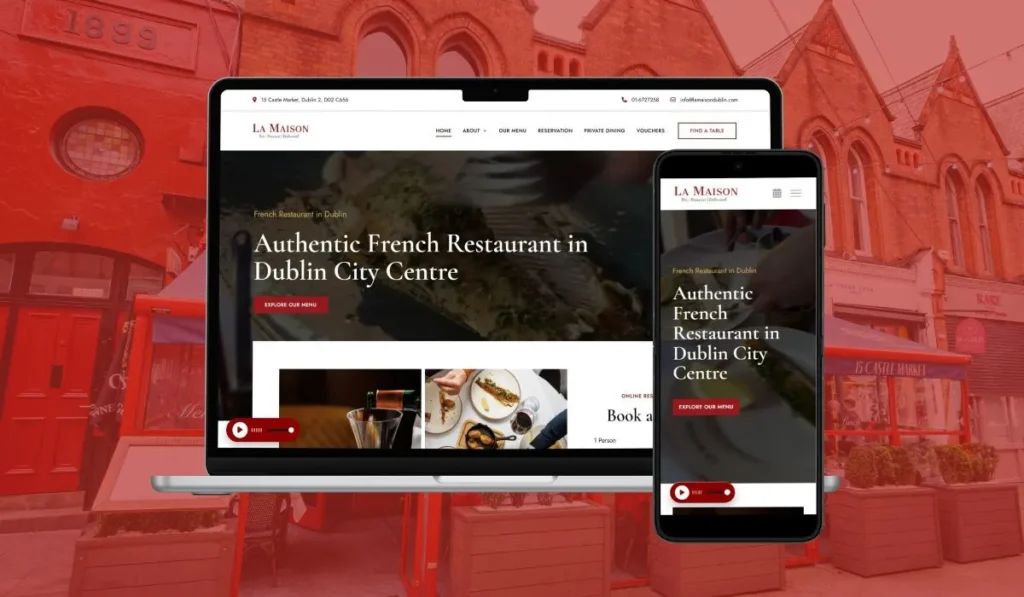
Typical website prices in Ireland
There is no universal price for a website because businesses do not all need the same solution. However, the following ranges provide a useful starting point when planning your budget.
| Type of website | Typical price range | Usually suitable for |
|---|---|---|
| Basic starter website | €500–€1,000 | A new business needing a simple online presence with limited content. |
| Small-business website | €1,000–€2,500 | Service businesses requiring a professional design, enquiry forms and core SEO setup. |
| Advanced business website | €2,500–€5,000+ | Established businesses with more pages, stronger content, integrations or custom functionality. |
| Ecommerce website | €2,500–€8,000+ | Businesses selling products online with payments, delivery settings and product management. |
| Custom platform | Quoted individually | Projects involving memberships, portals, advanced databases or bespoke development. |
These are broad market guidelines rather than fixed quotations. The final price should reflect the actual scope, content and functionality required.
Important: a cheaper quotation is not automatically poor value, and a more expensive quotation is not automatically better. The important question is what is included and whether the proposed website supports your business goals.
What affects website cost in Ireland?
Two websites may look similar from the outside while requiring very different amounts of planning and development. These are the main factors that influence website cost in Ireland.
Number of pages
Every additional page requires structure, copy, imagery, mobile styling, metadata and testing. A focused five-page website will normally cost less than a detailed 30-page site.
Custom design
A tailored design requires more work than installing a ready-made template. It should reflect the business, guide visitors clearly and remain consistent across the full website.
Content and copywriting
Website copy, image selection, editing and page planning all take time. A quotation should clearly state whether you or the agency will supply the final content.
Mobile optimisation
Responsive design involves more than shrinking a desktop page. Text, navigation, buttons, images and forms must all be checked and adjusted for smaller screens.
SEO foundations
Page structure, headings, URLs, metadata, image optimisation, internal links and technical indexability should be considered while the website is being built.
Functionality
Booking systems, online payments, product catalogues, memberships, multilingual content and connections to other software can increase development time.
Website structure and number of pages
A website needs a logical structure before individual pages are built. For a small service business, that might include a homepage, services, about, portfolio, testimonials and contact page.
A larger business may need separate pages for individual services, industries, locations, case studies and frequently asked questions. Those pages can create more opportunities to rank in search results, but each one needs useful and distinct content.
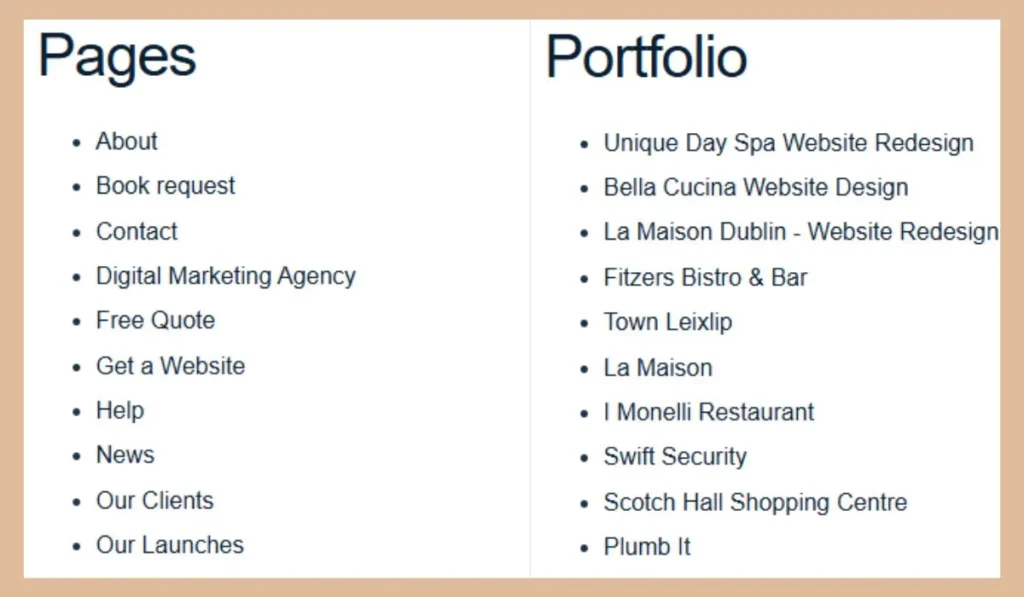
Type of website
A brochure website introduces a company and encourages visitors to contact the business. An ecommerce website must also handle products, stock, payments, customer emails, taxes and delivery rules.
Similarly, a restaurant website may require menus, reservations and private-dining enquiries, while a professional-services website may need downloadable resources, appointment forms or protected client areas.
For more specific information, see our pages covering small-business website design, restaurant website design and ecommerce website design.
Design quality and user experience
Good website design is not only about visual appearance. The layout should make it obvious what the business offers, why visitors should trust it and what they should do next.
A professionally planned website typically includes a clear hierarchy, consistent spacing, accessible typography, carefully positioned calls to action and a smooth journey from the landing page to an enquiry or purchase.
Based on our own project work: the strongest websites usually combine modern presentation with real business evidence, such as completed projects, customer reviews, case studies, recognisable clients and clear service information.
Mobile website development
Many potential customers will first encounter your business on a phone. Mobile optimisation therefore needs to be part of the build, rather than an adjustment made at the very end.
Menus must remain easy to use, buttons must be large enough to tap, images should load efficiently and important information should appear without excessive scrolling.

SEO included during the build
A website can look impressive and still struggle to appear in search results. Basic on-page and technical SEO should therefore be considered while pages are being created.
A properly prepared business website should include:
- A clear heading structure
- Descriptive and readable URLs
- Unique SEO titles and meta descriptions
- Relevant internal links
- Descriptive image alt attributes
- Mobile-friendly layouts
- Indexable pages with correct canonical tags
- An XML sitemap and sensible site architecture
Our SEO optimisation services cover deeper research, technical checks, content improvement and ongoing search performance. Google also provides a useful overview of SEO fundamentals for website owners.
Extra features and integrations
Additional functionality can be valuable, but it should solve a genuine business need. Each feature must be configured, styled, tested and maintained.
- Restaurant or appointment reservations
- Contact and quotation forms
- Online payments and deposits
- Product filters and ecommerce checkout
- Event registration or ticket sales
- Newsletter and CRM integrations
- Members-only content
- Multilingual functionality
Cheap website versus professional website
A low-cost website may be enough for a very new business that only needs a temporary online presence. Problems arise when a basic package is expected to perform like a professionally planned sales and marketing tool.
Lower-cost website
- Usually based on a standard template
- Limited page structure
- Content largely supplied by the client
- Fewer revisions and custom features
- Basic technical setup
- Limited post-launch assistance
Professional website
- Designed around the business and audience
- Clear conversion-focused structure
- Responsive layouts tested across devices
- SEO foundations built into each page
- Stronger portfolio and trust content
- Training, support and maintenance options
Before accepting a quotation: confirm who supplies the content, how many pages are included, whether hosting and maintenance are separate, what happens after launch and whether you will own the website and its accounts.
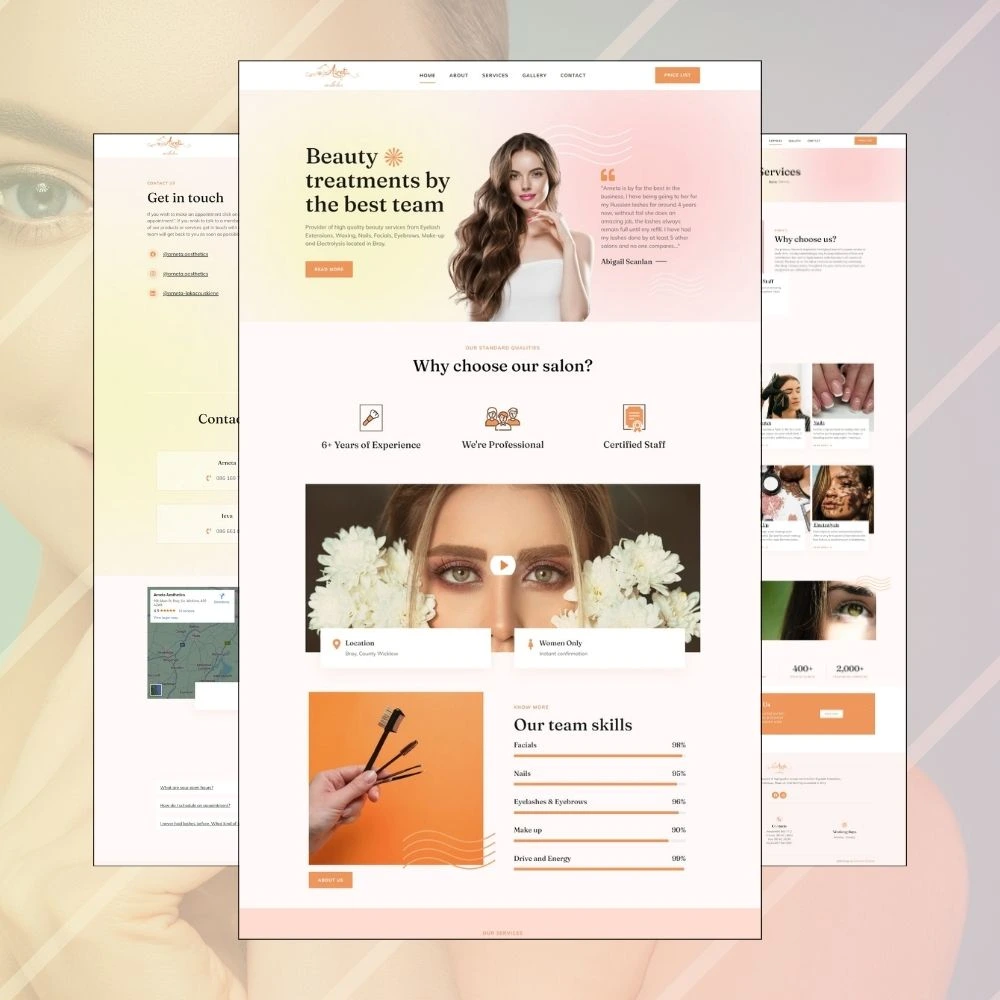

What ongoing website costs should you expect?
The initial website build is not always the only expense. Ask for a clear explanation of recurring costs before approving the project.
Domain name
The annual registration fee for the website address, such as a .ie or .com domain.
Website hosting
The server service that stores the website and makes it accessible online.
Maintenance
Updates, security checks, backups, monitoring and technical support after launch.
Premium software
Some booking systems, plugins, payment tools or specialist integrations require annual licences.
Content updates
New pages, services, products, team members, campaigns and seasonal information.
SEO and marketing
Ongoing SEO, advertising and content work are normally separate from the initial website build.
Maintenance is particularly important for WordPress websites because the platform, theme and plugins receive regular updates. Our website maintenance services are designed to keep business websites secure, current and functioning correctly.

How we price a website project
We do not base a quotation on appearance alone. We first establish what the website needs to achieve and what work is required to deliver it properly.
Understand the business
We review the services, target audience, current website and main commercial objectives.
Define the scope
We agree the pages, content requirements, functions, integrations and project responsibilities.
Plan the customer journey
We organise the information and calls to action around what visitors need to understand and do.
Provide a clear quotation
The proposal explains the deliverables so the client can understand what is included in the price.
You can view examples of completed work in our website portfolio and read more detailed results in our case studies.
How to compare website design quotations
Comparing quotations only by the total at the bottom can be misleading. One proposal may include content assistance, SEO preparation, mobile testing and post-launch support, while another may cover only the initial design.
Ask each provider the following questions:
- How many pages are included?
- Is the design custom or based on a template?
- Who supplies and uploads the content?
- Are mobile layouts designed and tested separately?
- What SEO work is included?
- Are forms, bookings or integrations included?
- Will I receive access to the website and hosting?
- What happens if I need changes after launch?
- Are hosting, maintenance and software licences included?
- Can the website be expanded later?
Frequently asked questions about website cost in Ireland
What is the average website cost in Ireland?
A professional small-business website commonly costs between €1,000 and €3,500. The price can be lower for a basic site or substantially higher for ecommerce, custom functionality and larger content requirements.
Why do website quotations vary so much?
Quotations can include very different levels of planning, custom design, content support, SEO, mobile optimisation, functionality and aftercare. Compare the full scope rather than only the final price.
Can I get a professional website for €500?
It may be possible to create a very simple template-based website within that budget. However, the number of pages, customisation, content, SEO work and support will usually be limited.
Does the website price include hosting?
That depends on the provider. Hosting may be included for the first year, charged separately or supplied through another company. It should be clearly stated in the quotation.
Are there ongoing costs after launch?
Most websites have recurring costs such as domain renewal, hosting, maintenance and certain software licences. Ongoing SEO, advertising and content updates are usually separate services.
Can I add more pages and features later?
Yes. A well-built WordPress website can normally be expanded with new services, case studies, landing pages, booking systems, ecommerce and other functionality as the business develops.
How long does a business website take to build?
A typical small-business website may take several weeks. Larger projects take longer, particularly when they involve extensive content, ecommerce, custom integrations or several rounds of approval.
Get a clear price for your website
Tell us about your business, the website you need and the results you want it to support. We will review the requirements and provide a clear quotation based on the actual scope.