
Restaurant SEO in Ireland: Google, Maps, Menus & Bookings
Restaurant SEO is not just about ranking a homepage for “restaurant near me”. The strongest restaurant search strategy connects Google Search, Google Maps, menus, booking journeys, location information and the website itself so customers can move from discovery to reservation with as little friction as possible.
For restaurants in Ireland, that means treating local search and website SEO as one customer journey rather than two separate jobs.
1. Make your location and restaurant type obvious
Search engines need clear signals about where the restaurant is, what it serves and which searches it should appear for. Your restaurant name, address, phone number, opening hours, cuisine and location should be consistent across your website and Google Business Profile.
The homepage should make the location and proposition clear without forcing users to search for basic information. If you have multiple locations, each location should have its own useful page rather than relying on one generic contact page.
2. Optimise Google Business Profile properly
A restaurant’s Google Business Profile is often the first result a customer sees. Keep opening hours, categories, booking links, website links, photos and attributes accurate. Review activity also matters because customers compare rating, recency and owner responses before they ever visit the website.
3. Treat menus as search content, not an afterthought
Menus are among the most commercially important pieces of restaurant content. A customer may search for brunch, vegan options, steak, private dining, Sunday lunch or a particular cuisine. If the only menu is a difficult PDF with little surrounding context, the website may be missing opportunities to match those searches.
Where practical, important menu information should also exist as crawlable website content. PDFs can still be offered for convenience, but the website should explain the key dining options in text.
4. Build pages around real customer intent
- Lunch and dinner
- Private dining
- Group bookings
- Christmas parties
- Weddings or events
- Gift vouchers
- Outdoor dining
- Specific locations or venues
If a service is commercially important, burying it in one paragraph on the homepage usually does not give customers or search engines enough detail.
5. Reduce booking friction
SEO traffic only matters if visitors can complete the next step. On mobile, a booking button should be easy to find, the booking system should load cleanly and users should not have to move through unnecessary pages to reserve a table.
Our restaurant website checklist covers the wider conversion elements that support this journey.
6. Use restaurant schema and clear site structure
Structured data can help search engines understand important business information. It should support, not replace, visible content. The website still needs clear headings, internal links, unique page titles and logical navigation.
7. Create useful local content
Restaurant content should answer real customer questions. Examples include private dining capacity, accessibility, parking, nearby landmarks, dietary information, event packages and seasonal menus. This is more useful than publishing generic lifestyle articles that have little connection to the restaurant.
8. Track bookings, not only rankings
Search Console can show impressions, clicks and rankings, while analytics can show what visitors do after landing on the site. For restaurants, the most useful measures are often booking clicks, completed reservation journeys, calls, directions and enquiry submissions.
9. Connect SEO with website design
Restaurant SEO performs best when the underlying website is fast, mobile-friendly and structured around customer intent. That is why restaurant website design and SEO should not be planned independently.
10. Use proof from real projects
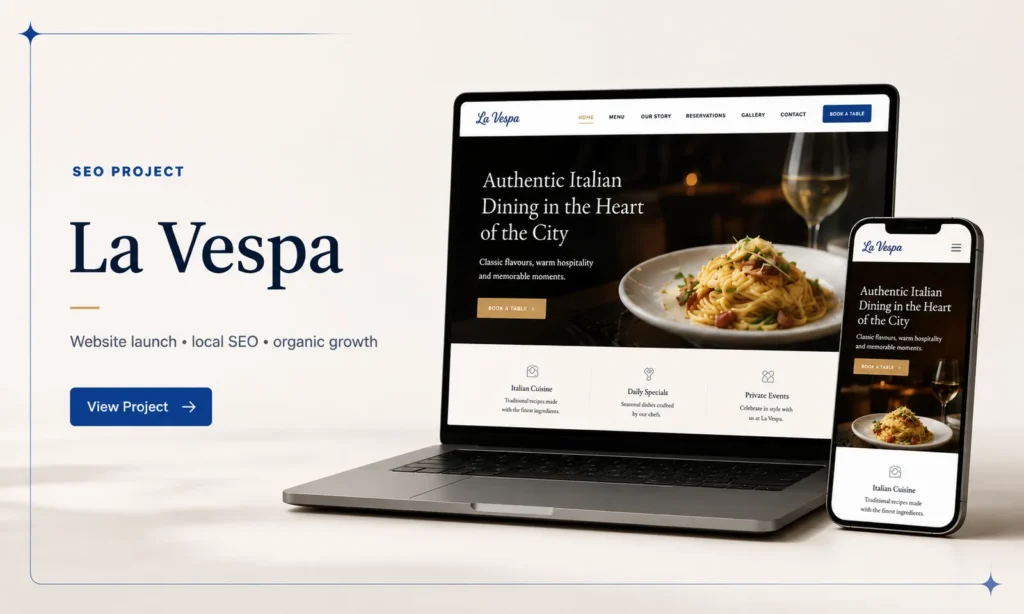
Advanced Solutions works with hospitality businesses across Ireland on websites, local visibility and SEO. Our work includes restaurant projects such as La Vespa, La Maison, Bella Cucina and Coyne’s Gastropub, giving us first-hand experience of the search and booking journeys that matter in this sector.
Where should a restaurant start?
Start with the basics: accurate Google Business Profile information, a mobile-friendly website, crawlable menu and service content, strong location signals and a booking journey that works. Then use Search Console and analytics to identify which pages and queries deserve further work.
If your restaurant already receives search impressions but not enough bookings, the next step is usually to review both visibility and conversion together rather than treating them as separate problems.
A restaurant SEO action plan by customer journey
A diner may start with a cuisine or location search, compare menus and photos, then look for a reservation slot. Structure your website around that journey. Important information should be accessible before customers are sent to a third-party booking interface.
For group dining, private events and celebrations, provide the room options, indicative capacity and an appropriate enquiry path. A page that answers those questions can be more useful than a generic blog post about the neighbourhood.
- Discovery: accurate location, category and Google Business Profile.
- Consideration: HTML menus, atmosphere, dietary information and real photographs.
- Decision: visible booking options, contact details and clear hours.
- Measurement: booking clicks, enquiry form completions and qualified leads.
Frequently asked questions
Can a restaurant rank without publishing blogs every week?
Yes. Strong menu, location, booking and venue information may matter more than a high volume of generic articles. Publish supporting content when it answers a genuine customer need.