
What Every Restaurant Website Needs to Win More Bookings
A good restaurant website should do more than look attractive. It should help the right customer find you, understand the experience, trust what they see and book without friction. This 12-point checklist covers the essentials we look for when reviewing hospitality websites.
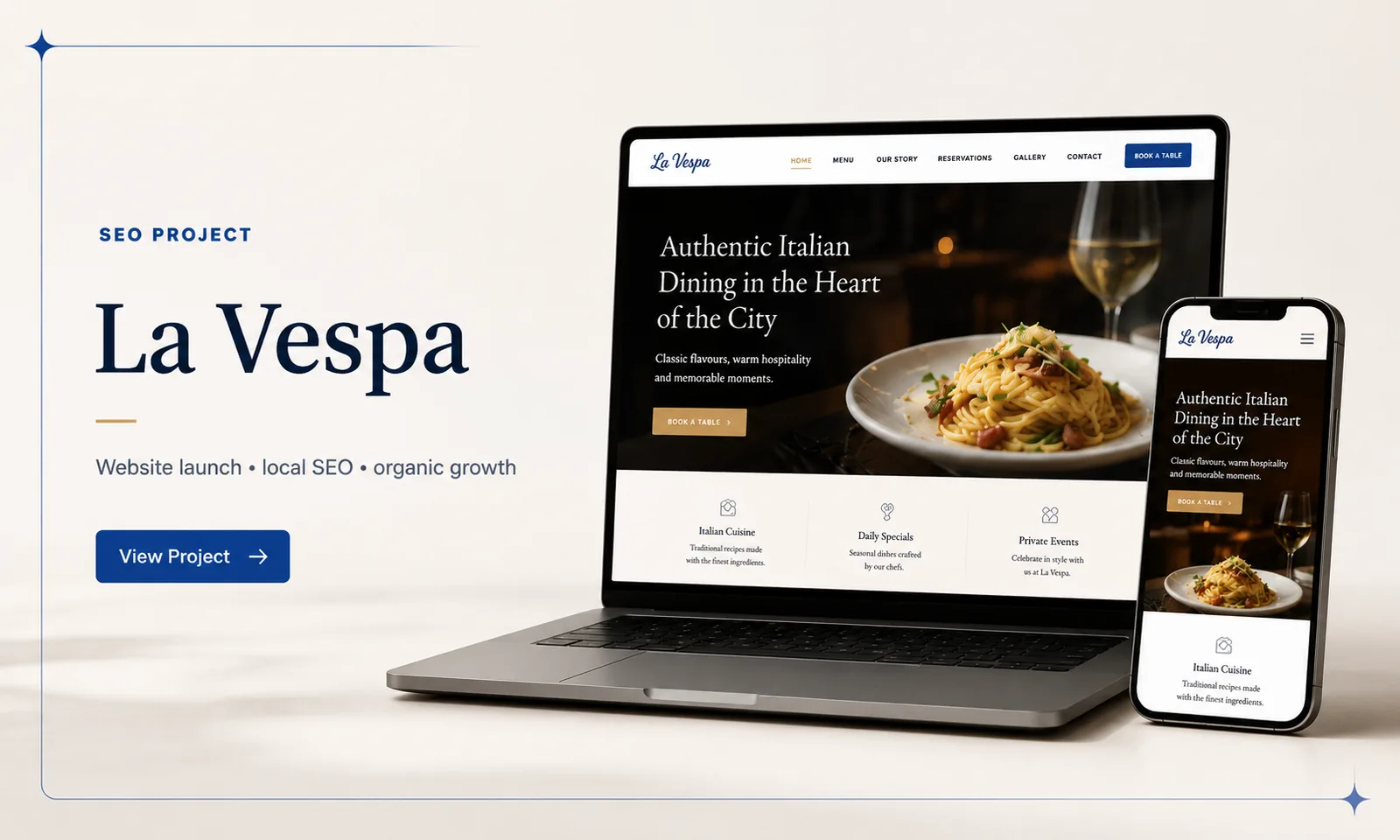
Be found. Be chosen. Be booked.
Restaurant customers rarely browse without purpose. They may be choosing somewhere for tonight, comparing menus for the weekend or looking for a private dining venue. The website has to answer practical questions quickly while also making the experience feel worth choosing.
Be found
Search engines and customers should immediately understand what the restaurant offers, where it is and why the page is relevant.
Be chosen
Imagery, content, menus and trust signals should make the restaurant feel like the right option for the occasion.
Be booked
Once interest is there, clear calls to action should remove friction rather than introduce another obstacle.
The first impression has to work immediately.
The customer should not need to work out what kind of restaurant you are, where you are or how to make a booking. The strongest restaurant sites make those decisions feel obvious.
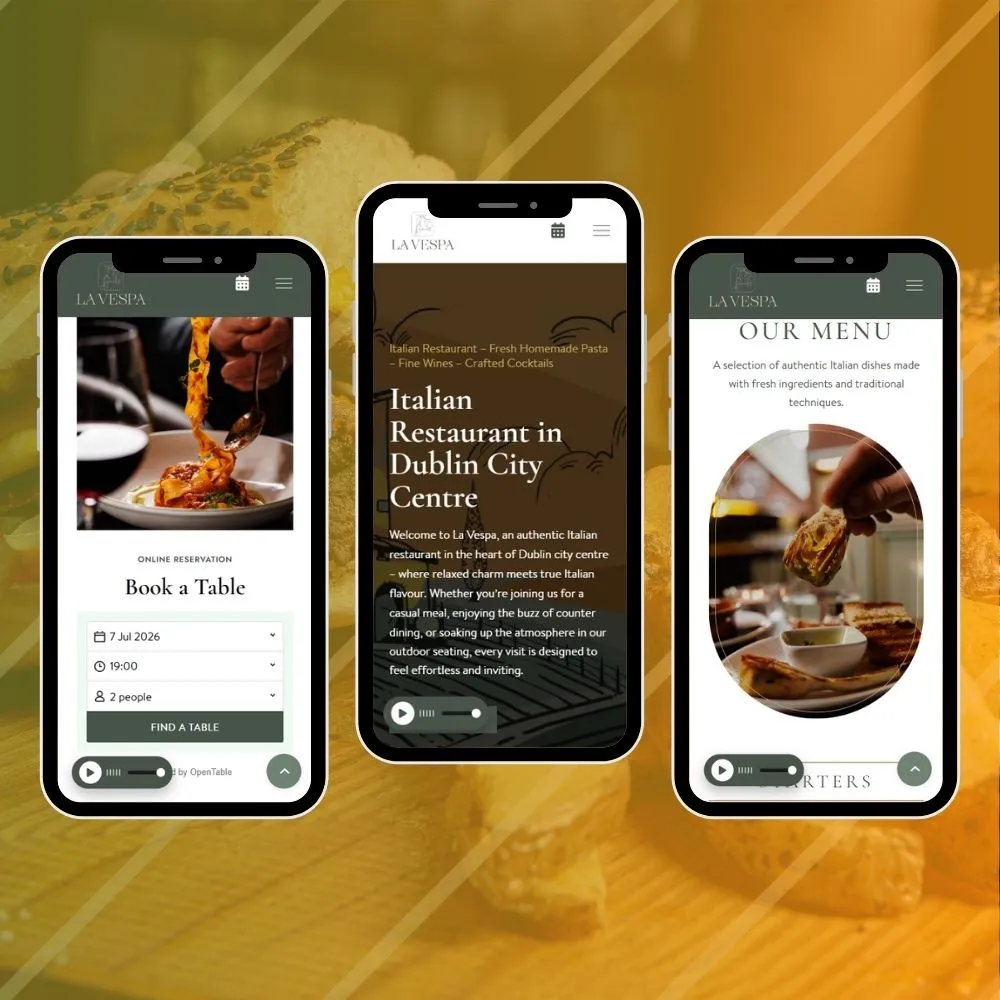
A clear first impression
Within a few seconds, visitors should understand the restaurant concept, location and reason to choose it.
- Use real, high-quality restaurant imagery.
- Keep the main message specific.
- Make the primary action visible immediately.
A genuinely mobile-first experience
Buttons should be easy to tap, menus should be readable without zooming and important information should not disappear behind awkward mobile layouts.
Booking should never be hard to find
If reservations matter, the booking action belongs in the header and at natural high-intent points throughout the site.
See how booking was treated as a core journey in our Coyne’s Gastropub website case study.
Make the practical information easy to find – and easy for Google to understand.
Menus, location, opening hours and local relevance are basic restaurant information, but they are also some of the most commercially important parts of the website.
Menus should be easy to view
A menu is one of the strongest decision-making assets on the site. Avoid burying it or forcing every mobile visitor into a clumsy PDF.
- Separate food and drink menus clearly.
- Make seasonal updates practical.
- Include dietary information where provided.
Hours, address and contact details must be obvious
Opening hours, location, phone number and directions should be easy to find and consistent across the website and Google Business Profile.
This consistency also supports local SEO.
Build around local search intent
Restaurant SEO is not about repeating a city name. It is about clear structure, useful content, sensible headings, internal links and accurate business information.
A well-managed Google Business Profile should support that website strategy.
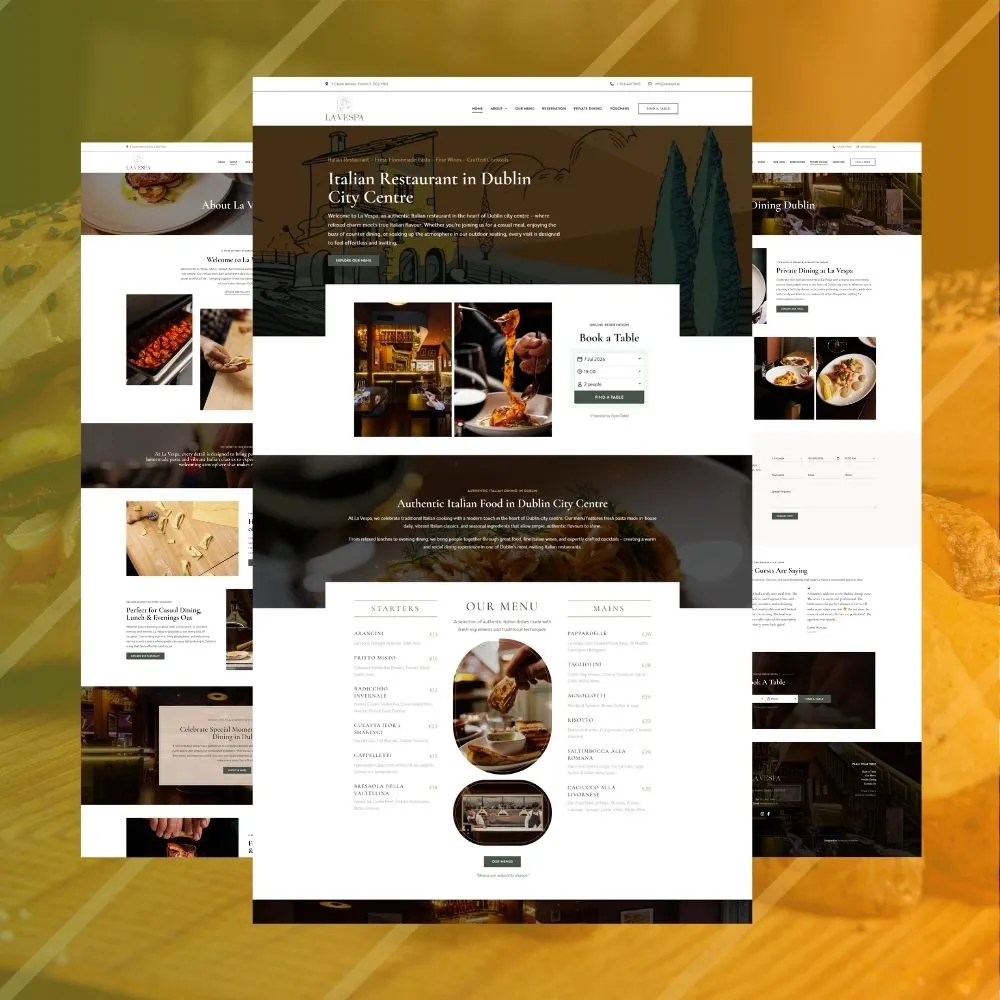
Good structure should feel effortless to the customer.
A restaurant site can contain plenty of information without feeling busy. The hierarchy matters: primary booking actions first, then menus, location, private dining and supporting content.
That is the thinking behind our restaurant website design service.
The website has to sell the experience before the customer arrives.
People are not only choosing food. They are choosing atmosphere, service, setting and confidence. The digital experience should reinforce those qualities, not weaken them.
Show the atmosphere, not just the food
Strong photography should help visitors imagine the occasion. If the space itself is a selling point, a restaurant virtual tour can add another layer of confidence.
Add real trust signals
Relevant reviews, awards, press mentions and recognisable proof reduce uncertainty. A few believable signals are stronger than a wall of generic badges.
Keep the website fast
Heavy imagery, third-party tools and old plugins can gradually slow a site down. Use appropriate image sizes, modern formats and regular technical checks.
Ongoing website maintenance helps prevent a good site becoming unreliable over time.
The online experience should match the real one.
Restaurant websites work best when visual quality and usability support each other. Beautiful photography cannot compensate for a confusing booking path, and a technically correct site can still feel uninspiring if it fails to communicate the venue.
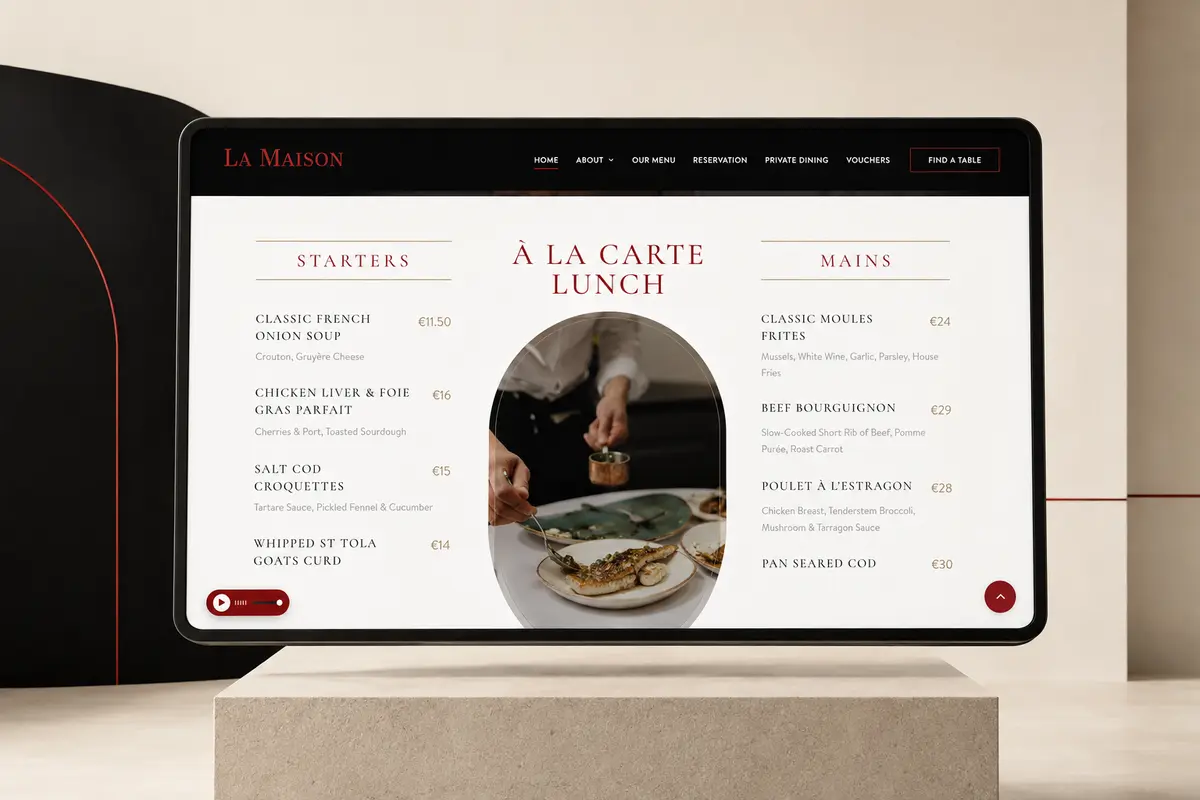
Good restaurant websites keep working after launch.
The site should support more than everyday reservations. It should help capture private dining and event opportunities, reveal what customers actually do and stay accurate as the restaurant evolves.
Give private dining and events their own journey
If groups, parties, weddings or corporate bookings matter commercially, they deserve dedicated content with capacities, room options, menus and a clear enquiry route.
Measure what customers actually do
Useful measurement goes beyond page views. Track booking clicks, menu views, contact actions, private-dining enquiries and traffic sources.
Our La Vespa SEO case study shows how real website and search data can guide decisions after launch.
Review the website regularly
Menus change. Hours change. Booking systems change. A website that was accurate at launch can become misleading surprisingly quickly if nobody owns the review process.
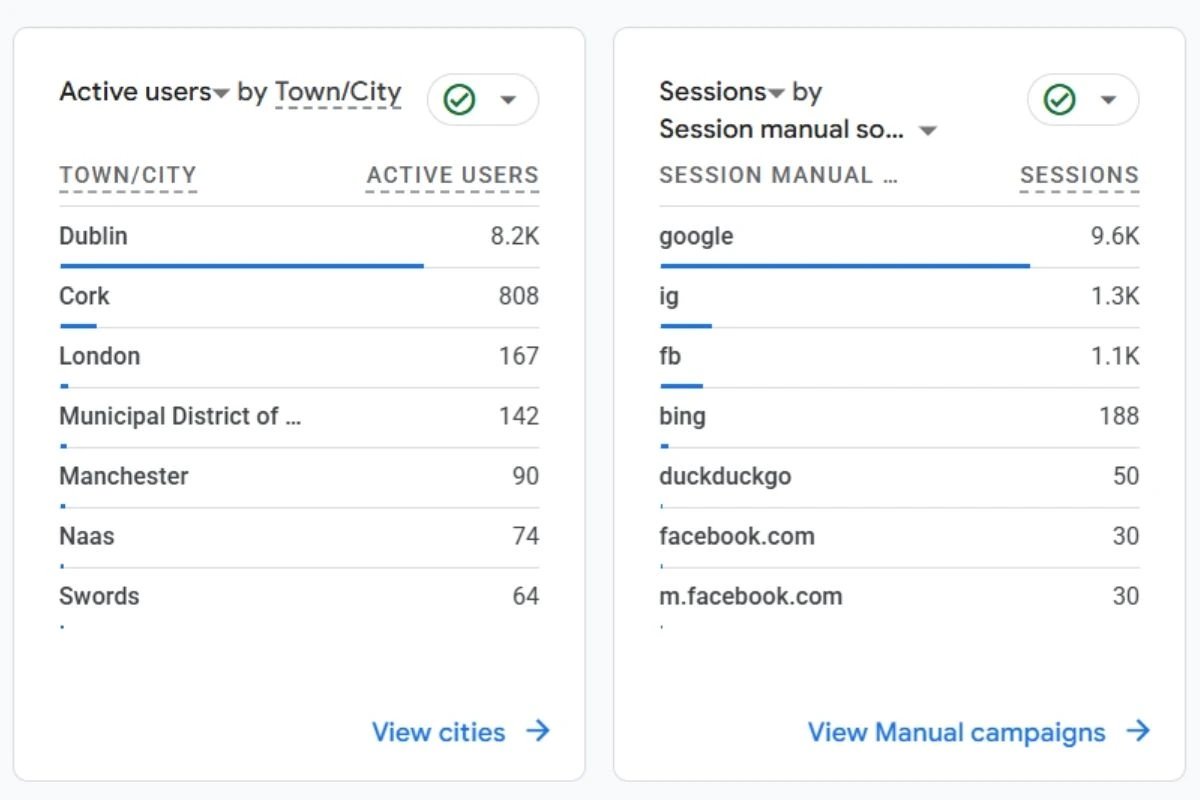
Measure the customer journey, not just traffic.
Traffic is useful, but the commercial questions matter more: are customers reaching menus, clicking booking links, making enquiries and arriving through the search channels that matter?
How does your restaurant website score?
If several of these answers are “no”, the problem may be the wider customer journey rather than one isolated page.
Want an independent view of what your website is costing you?
We review restaurant websites through the eyes of a customer as well as the technical and SEO side. The goal is not to produce a generic score. It is to identify what is helping, what is creating friction and what should be prioritised next.
Restaurant website checklist FAQs
Common questions we hear when restaurant owners are reviewing their website and deciding what to improve first.
What is the most important part of a restaurant website?
The most important part is the customer journey. Visitors should quickly understand the restaurant, find the information they need and be able to book, call or enquire without unnecessary steps.
Should a restaurant menu be a PDF?
A PDF can be useful as a secondary option, but it should not create friction for mobile users. Where practical, important menu information should be easy to read directly on the website.
How does local SEO help restaurants?
Local SEO helps search engines understand the restaurant’s location, relevance and business information so it has a stronger chance of appearing when nearby customers search for places to eat.
How often should a restaurant website be reviewed?
Menus, hours, booking links and contact details should be checked regularly. A broader review of usability, SEO, speed and conversion performance is useful several times a year or whenever the restaurant changes its offer.